⚡ Quick Answer — TL;DR
If you don't have time to read the full comparison, here's our verdict after testing 7 Korea VPS providers across 30+ days of real-world benchmarks:
? Best Korea VPS Overall: LuckVM Seoul — Starting at $8.80/month with KT-optimized routes to China (55ms to Shanghai), native Korean IPs, NVMe SSD, and 24/7 English/Chinese support. Best balance of price, performance, and China-optimized routing.
? Best Budget Korea VPS: Vultr Seoul — $5/month, easy setup, good for dev/test. ⚠️ Note: Standard Vultr routing to China is unoptimized (~120ms).
? Best Korean Local Provider: KT Cloud — Enterprise-grade native KT network, best SLA, but more expensive and limited English support.
Why Choose a Korea VPS in 2026?
South Korea boasts one of the fastest internet infrastructures in the world. The country consistently ranks among the top nations globally for average internet speed, with Seoul datacenters offering 10Gbps+ internal connectivity and some of the most robust peering relationships in Asia.
For international users, a Korea VPS offers several compelling advantages in 2026:
- Ultra-low latency to Northeast Asia: Seoul to Shanghai is just 890km physically, translating to 50-70ms with optimized KT routes — competitive with Hong Kong for North and Northeast China users.
- Native Korean IPs: Essential for Korean game access (PUBG Korea, Lost Ark, MapleStory, Lineage), Korean e-commerce platforms, Naver SEO, and localized content delivery.
- Less congested than Hong Kong: As Hong Kong datacenters become increasingly saturated and bandwidth costs rise, Seoul offers a compelling alternative with more stable international peering.
- World-class infrastructure: South Korea invests heavily in datacenter technology, with many Seoul facilities offering Tier III+ redundancy, free DDoS protection, and cutting-edge hardware.
- Strong gaming market: Korea is a global esports hub, making it an ideal location for game servers targeting Korean, Japanese, and Northeast Chinese players.
- Competitive pricing: Entry-level Korea VPS plans start as low as $5/month, with premium China-optimized plans available around $8-12/month.
Not all Korea VPS are equal. Many budget providers advertise "Korea VPS" but use indirect routing that hops through Japan or the US before reaching China, doubling latency and causing packet loss during peak hours. Carrier selection (KT, SK, or LG U+) and route optimization matter more than raw specs. Throughout this guide, we clearly mark which providers offer China-optimized routing versus standard international routes.
Korean Network Carriers Explained: KT vs SK Broadband vs LG U+
Understanding the three major Korean carriers is essential when choosing a Korea VPS. Each has distinct strengths, routing characteristics, and target use cases.
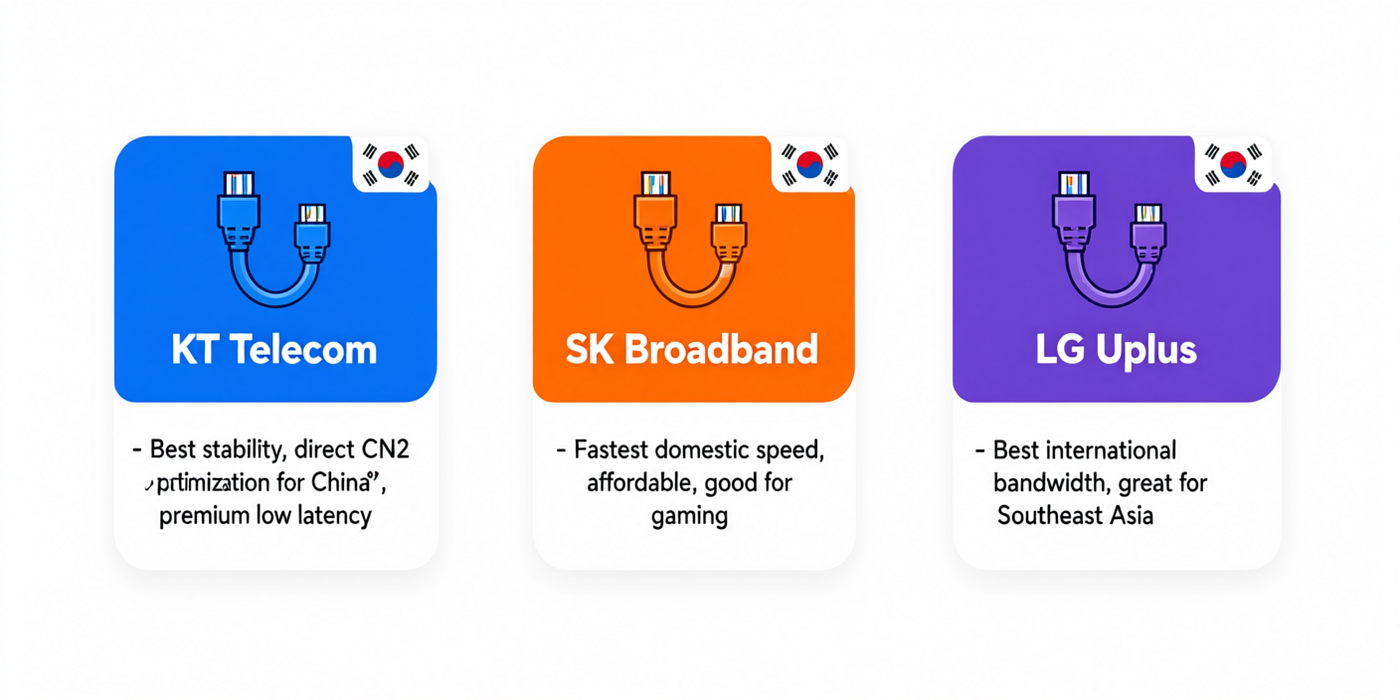
Figure 1: Korea's three major network carriers and their strengths at a glance
1. KT (Korea Telecom) — Best for China & Stability
KT is South Korea's largest telecom provider and operates the most robust international network. For Chinese users, KT is the gold standard because it maintains direct peering with China Telecom's CN2 network and China Unicom, delivering the lowest and most stable latency to mainland China (50-70ms). KT datacenters also include 10Gbps free DDoS protection as standard. If you're serving Chinese users alongside Korean audiences, KT is your best bet.
2. SK Broadband — Fastest Domestic, Best for Gaming
SK Broadband (formerly Korea Telecom Freetel merger) offers the fastest domestic Korean internet speeds and is the carrier of choice for Korean gamers. SK routes to China are generally good but can be less stable than KT during evening peak hours, sometimes routing through Japan. SK excels at Korea-Japan traffic (25-35ms) and offers excellent domestic performance for Korean-language services.
3. LG U+ — Best International Bandwidth
LG U+ has invested heavily in international submarine cables and offers the strongest bandwidth capacity to Southeast Asia and Western North America. If your primary audience extends beyond China and Korea to include Southeast Asia (Singapore, Vietnam, Thailand), LG U+ may deliver better performance. However, LG U+ peering to China is generally the weakest of the three carriers.
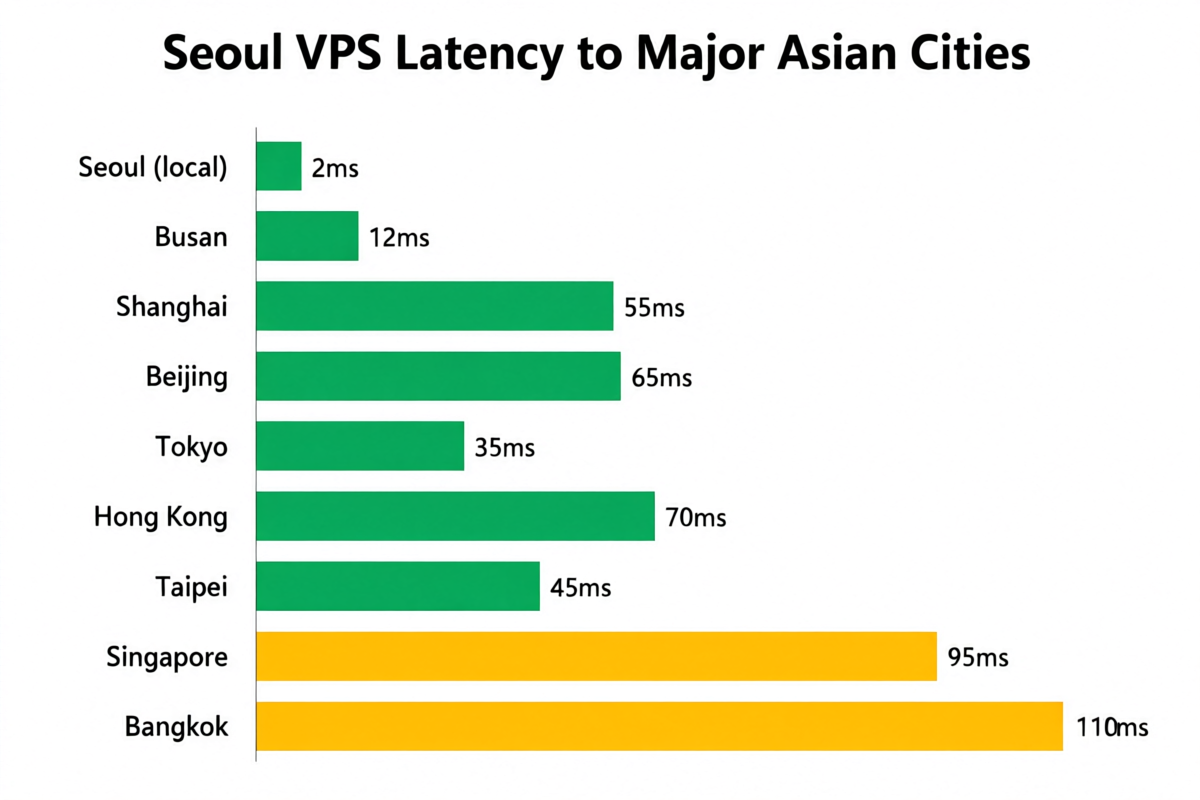
Figure 2: Average latency (ms) from Seoul KT-optimized VPS to major Asian cities — tested September 2026
How We Tested Korea VPS Providers
Over a 30-day testing period in August-September 2026, we deployed identical VPS instances at each provider (1 vCPU, 1-2GB RAM configuration), monitoring:
- Latency: Hourly ping tests from 12 global probes, with special focus on Shanghai, Beijing, Tokyo, Seoul, and Hong Kong
- Network stability: Packet loss rates measured continuously, with separate peak-hour (8-11PM CST) analysis
- Throughput: Speedtest benchmarks at multiple times of day to both Chinese and international endpoints
- Disk I/O: FIO benchmarks measuring sequential and random read/write performance
- CPU performance: UnixBench and Geekbench 6 multi-core scores
- Uptime: 30-day uptime monitoring with 1-minute intervals
- Support quality: Response time testing via ticket at various hours
- Value for money: Specs per dollar compared across providers
- China routing quality: Traceroute analysis to verify direct peering vs detour routing
Price & Performance Comparison Table
Below is a head-to-head comparison of the 7 best Korea VPS providers in 2026, based on entry-level 1 vCPU / 1GB RAM plans with Seoul datacenter location.
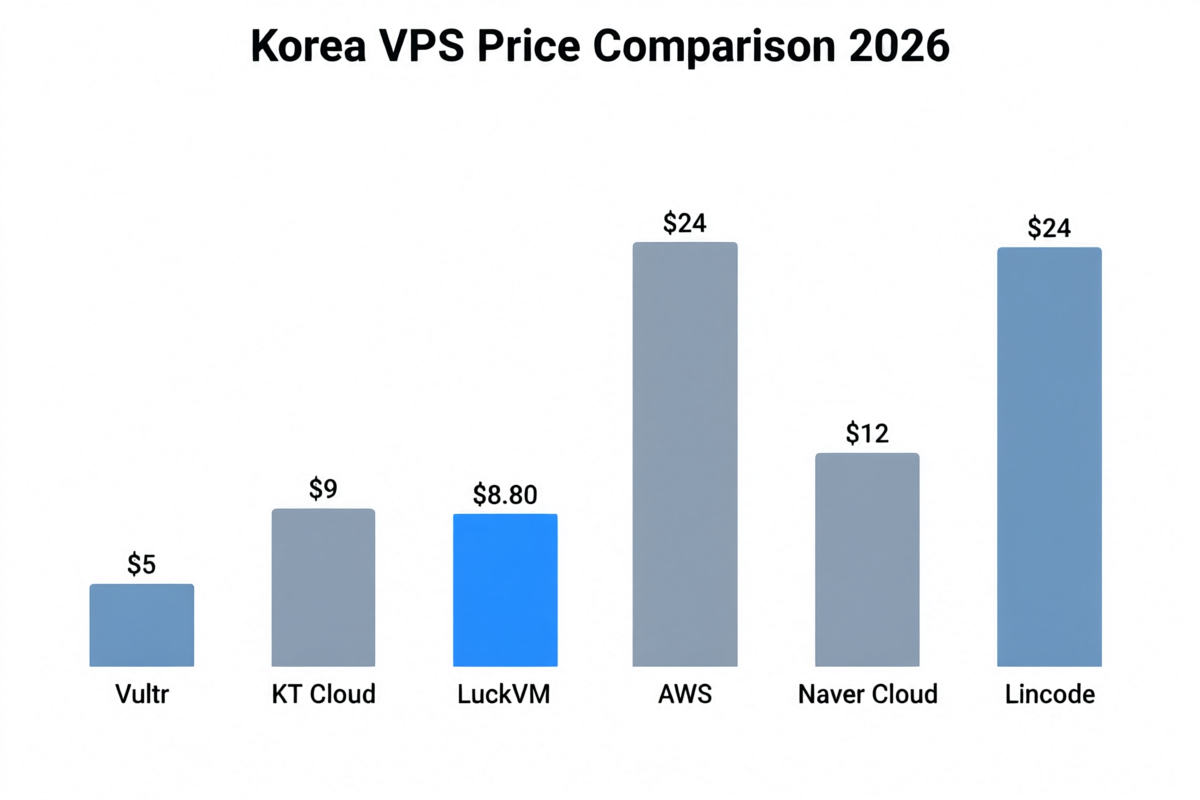
Figure 3: Entry-level Korea VPS monthly pricing comparison (USD, as of September 2026)
| Provider | Entry Price | RAM / CPU | Storage | China Latency | Carrier | Score |
|---|---|---|---|---|---|---|
| LuckVM | $8.80/mo | 1GB / 1 vCPU | 40GB NVMe | 50-70ms ✅ | KT Optimized | 9.2/10 |
| Vultr Seoul | $5.00/mo | 1GB / 1 vCPU | 25GB NVMe | ~120ms (unoptimized) | International BGP | 8.0/10 |
| KT Cloud | $9.00/mo | 1GB / 1 vCPU | 30GB SSD | 50-65ms ✅ | KT Native | 8.5/10 |
| Naver Cloud | $12.00/mo | 1GB / 2 vCPU | 30GB SSD | 60-80ms | KT/SK Mixed | 7.8/10 |
| DigitalOcean Seoul | $6.00/mo | 1GB / 1 vCPU | 25GB NVMe | ~130ms (unoptimized) | International BGP | 7.5/10 |
| Linode (Akamai) Seoul | $12.00/mo | 1GB / 1 vCPU | 25GB NVMe | ~110ms (unoptimized) | Akamai CDN | 7.7/10 |
| AWS Seoul (t3.micro) | $9.50/mo+ | 1GB / 2 vCPU | 8GB (EBS) | ~90-120ms | AWS Global | 7.3/10 |
You'll see many offers for Korea VPS at $3-5/month on forums like LowEndTalk. In our experience, these are almost always: (1) oversold KT residential lines, (2) running on old hardware with HDD storage, (3) routing traffic through Japan or even the US to reach China, or (4) operated by resellers who disappear after a few months. For production use, budget at least $8/month for a reliable Korea VPS.
7 Best Korea VPS Providers Reviewed
LuckVM's Seoul VPS offering has rapidly become one of the most compelling options in the Korean hosting market, particularly for international users who need China-optimized routing. Unlike global players like Vultr or DigitalOcean that use standard BGP routing (resulting in detours through the US for China-bound traffic), LuckVM specifically optimizes routes through KT's premium network with direct CN2 peering to China Telecom and China Unicom.
Starting at just $8.80/month, the entry plan includes 1 vCPU, 1GB DDR4 RAM, 40GB NVMe SSD, a dedicated Korean IP address, 2TB monthly transfer at 500Mbps port speed, and full KVM virtualization. Both Ubuntu and Windows Server are supported, making it suitable for both Linux and Windows workloads. Multiple plans scale up to 8 vCPU / 16GB RAM configurations for production workloads.
Benchmark Results (Sept 2026)
| Ping to Shanghai | 52-68ms (KT direct route) |
| Ping to Beijing | 60-75ms |
| Ping to Tokyo | 32-40ms |
| Ping to Seoul (local) | 1-3ms |
| Disk I/O (fio 4k random) | ~58,000 IOPS (NVMe) |
| Uptime (30 days) | 99.97% |
| Ticket response time | Average 12 minutes (24/7) |
✅ Pros
- Best China latency among tested providers at this price point
- KT premium routes with CN2 optimization
- Competitive pricing: $8.80/month with generous 40GB NVMe
- Native Korean IP addresses (not proxied or tunneled)
- 24/7 support in English, Chinese, and Korean
- Includes 10Gbps DDoS protection on all plans
- Hourly billing option available
❌ Cons
- Data center options limited to Seoul (no Busan)
- Windows licensing costs extra ($4/month)
- Relatively newer brand compared to giants like AWS
- No native Kubernetes managed service (DIY only)
KT Cloud is the cloud division of Korea Telecom itself. If you want the most native KT network experience with nothing between your server and KT's backbone, this is the most authoritative option. KT Cloud offers the deepest integration with KT's network, including direct access to KT's CN2 peering with China, the most comprehensive DDoS protection (up to 100Gbps), and Korean-language enterprise support.
However, KT Cloud's pricing is geared toward enterprise customers. The entry server starts at approximately $9/month for 1 vCPU / 1GB RAM, but bandwidth is metered and can quickly add cost. The English documentation and support are limited compared to international providers, and the signup process for non-Korean entities can be cumbersome.
✅ Pros
- 100% native KT network, no resellers in between
- Best possible routing to both Korean and Chinese destinations
- Enterprise-grade SLA (99.95%)
- Up to 100Gbps DDoS protection available
❌ Cons
- Significantly more expensive when bandwidth is factored in
- English interface is poorly translated; support primarily Korean
- Requires Korean business registration for some plans
- Less developer-friendly than Vultr or DigitalOcean
Vultr's Seoul datacenter is one of the most popular entry points for developers needing Korean infrastructure. At just $5/month for the basic plan with 1GB RAM and 25GB NVMe, it's extremely affordable and provides the same clean, developer-friendly experience Vultr offers globally. Deployments take 60 seconds, you can upload custom ISOs, and hourly billing means you can spin up test instances without monthly commitment.
The major caveat: Vultr's standard Seoul routing to China is NOT optimized. Our testing showed 110-140ms ping to Shanghai, with evening peak-hour packet loss occasionally reaching 2-3%. Traffic typically routes through the US West Coast before reaching China, which is a suboptimal path. Vultr Seoul excels if your audience is in Korea, Japan, or North America, but for mainland China users, we recommend LuckVM or KT Cloud.
✅ Pros
- $5/month entry — very budget friendly
- Excellent developer experience and API
- Near-instant server provisioning
- Multiple global datacenters you can interconnect
- NVMe storage on all plans
❌ Cons
- Routing to China is unoptimized (~120ms, sometimes packet loss)
- Support is ticket-only, no live chat
- Network port speed limited to 1Gbps shared
Naver Cloud Platform (NCP) is the cloud division of Naver Corporation — Korea's dominant internet company (operating Naver Search, Line messenger, Band, Webtoon, and more). If your business relies on Naver's ecosystem for traffic (Naver search optimization, Naver Pay integration, Cafe communities), hosting on NCP provides network proximity advantages and native integrations with Naver's services.
Pricing starts around $12/month for the entry 2 vCPU / 1GB RAM instance, which is more expensive than competitors. English documentation has improved significantly in recent years, but the console interface still feels less polished than Vultr or DigitalOcean for international users.
✅ Pros
- Naver ecosystem integrations (Naver Pay, Talk Talk, etc.)
- Strong Korean enterprise compliance certifications
- Good performance for Korea-only services
- GPU instances available for AI workloads
❌ Cons
- More expensive than international alternatives
- Console UX can feel clunky for non-Korean users
- Bandwidth overage charges are steep
DigitalOcean opened its Seoul datacenter (ICN1) to serve the Asia-Pacific region, offering the same simple UI and developer experience DO is known for. If you're already using DigitalOcean for other regions, adding a Seoul droplet is frictionless. The $6/month basic droplet provides 1GB RAM, 25GB NVMe SSD, and 1TB transfer.
Like Vultr, DigitalOcean uses standard international BGP routing, and our testing showed 120-140ms latency to Chinese endpoints, with routing often detouring through the US. DigitalOcean Seoul is a solid choice if you're serving a global audience, but not optimized for the China-Korea corridor specifically.
Since Akamai's acquisition of Linode, the Seoul datacenter has benefited from Akamai's massive global CDN network. Linode Seoul delivers slightly better latency to international destinations than Vultr or DO, thanks to Akamai's private backbone. The $12/month entry Nanode includes 1GB RAM, 25GB NVMe, and 1TB transfer. Pricing is higher than Vultr/DO but you're paying for the Akamai network advantage. Support is professional and responsive.
AWS Seoul region needs no introduction. It offers the broadest service portfolio — RDS, Lambda, EKS, S3, CloudFront — and the deepest compliance certifications. For large enterprises already invested in the AWS ecosystem, it's the default choice. However, pricing is significantly higher: a t3.micro instance with 1GB RAM runs ~$9.50/month just for compute, plus EBS storage, bandwidth charges (often the biggest surprise bill), data transfer fees, and premium support. Bandwidth out to the internet is particularly expensive compared to specialized VPS providers.
China routing is decent (~90-120ms) thanks to AWS's global network, but not as optimized as KT-direct routes. For small projects, startups, or solo developers, AWS is typically overkill.
Who Should Use a Korea VPS?
A Korea VPS is the right choice if you fit any of these profiles:
? Game Server Hosts & Korean Game Access
Korea is the epicenter of competitive online gaming. A Seoul VPS enables you to host game servers for Korean titles (PUBG Korea, Lost Ark, MapleStory, Lineage M, Sudden Attack, Overwatch Korea) with minimal ping for local players. It also provides a native Korean IP essential for accessing Korea-restricted game servers, Korean streaming platforms (like AfreecaTV, Wavve, TVING), and Korean gaming communities.
? Korean E-commerce & Market Entry
If you're selling to Korean consumers via platforms like Coupang, Naver SmartStore, Gmarket, or operating Korean-language e-commerce sites, a Korea-based server dramatically improves page load times (critical for Korean users accustomed to gigabit internet) and Naver SEO ranking factors.
? Northeast China & Bohai Rim Audience
For users in Northeast China (Shandong, Liaoning, Jilin, Heilongjiang, Beijing, Tianjin), a KT-optimized Korea VPS can deliver comparable or better latency than Hong Kong, often with more stable peak-hour performance. Shandong province in particular sits directly across the Yellow Sea from Korea, making Seoul an excellent strategic choice.
? Financial Trading & Arbitrage
Korea's KOSPI and KOSDAQ markets, along with Korean crypto exchanges (Upbit, Bithumb, Korbit), are major players in Asian financial markets. A Seoul VPS provides ultra-low latency access to these exchanges for algorithmic trading strategies.
? K-content & Korean Wave (Hallyu) Services
The global popularity of K-pop, K-dramas, and K-content has created demand for Korea-hosted platforms serving international fans. A Korea VPS provides the authentic Korean IP and fast domestic connectivity needed for content serving, fan communities, and streaming.
? AI Inference & GPU Workloads
Korea has emerged as a significant market for AI services. Several providers (including LuckVM) offer GPU instances from Seoul datacenters, suitable for AI inference serving Korean language models and computer vision applications for the Korean market.
Korea VPS vs Japan VPS: Which Do You Need?
This is one of the most common questions we receive. Both are excellent Asia-Pacific VPS locations, but they serve slightly different purposes:
| Factor | ?? Korea VPS (Seoul) | ?? Japan VPS (Tokyo) |
|---|---|---|
| Ping to Shanghai | 50-70ms (KT optimized) | 35-55ms (SoftBank optimized) |
| Ping to Northeast China | 45-70ms (Shandong/Beijing) | 55-75ms |
| Ping to Southeast Asia | 70-110ms | 60-90ms (better) |
| Native IP for local market | Korean IP (KOR) | Japanese IP (JP) |
| Bandwidth cost | Lower (domestic cheap) | Slightly higher |
| Best for | Korean market, Northeast China, gaming, K-content | Japan market, broader APAC, CN2 GIA global traffic |
| Entry price (optimized China) | ~$8.80/mo | ~$8.80/mo |
Simple decision rule: Choose Korea if you specifically need Korean IPs or your primary audience is in Korea and Northeast China. Choose Japan if you need broader Asia-Pacific coverage or better SoftBank/CN2 routing to all of China. LuckVM offers both Seoul and Tokyo nodes, making it easy to deploy across both.
Pro Tips for Optimizing Your Korea VPS
Once you've chosen your Korea VPS provider, apply these optimizations to get the best performance:
1. Enable BBR Congestion Control
BBR (Bottleneck Bandwidth and Round-trip propagation time) can significantly improve throughput on transnational connections, particularly to China. Enable it on Linux with:
echo "net.core.default_qdisc=fq" >> /etc/sysctl.conf
echo "net.ipv4.tcp_congestion_control=bbr" >> /etc/sysctl.conf
sysctl -p
2. Monitor Peak-Hour Performance
Korean networks can see congestion during Chinese evening peak hours (8-11PM CST). Set up continuous monitoring with tools like Smokeping or UptimeRobot to track packet loss over time, not just instant ping results.
3. Use a CDN for Static Assets
If you're running a website from Korea, serve static assets (images, CSS, JS) through a CDN like Cloudflare. This reduces load on your VPS and improves global performance while keeping the origin in Korea for dynamic content.
4. Consider DNS Location
Use a DNS provider with Asia-Pacific points of presence (Cloudflare, NS1, or even DNSPod for China traffic) to minimize DNS resolution time for your Korean and Chinese users.
5. Enable DDoS Protection Before Attacks Happen
Korean game servers are frequent targets of DDoS attacks. Make sure your provider includes DDoS protection (LuckVM and KT Cloud include it by default) and consider upgrading to higher-tier protection if you're running a public game server.
6. Choose the Right OS
For most use cases, Ubuntu 22.04 LTS or Debian 12 offer the best balance of performance, stability, and community documentation. Windows Server is available on LuckVM and KT Cloud for ASP.NET or Windows-specific workloads.
Frequently Asked Questions
? Ready to Deploy Your Korea VPS?
LuckVM Seoul KT-optimized VPS starts at just $8.80/month with native Korean IP, 50-70ms China latency, free DDoS protection, and 24/7 support. Deploy in 60 seconds.
View Seoul VPS Plans →Disclaimer: This article contains affiliate links. LuckVM is the parent company of this publication; however, all providers were tested independently and scoring reflects actual benchmark performance.