TL;DR
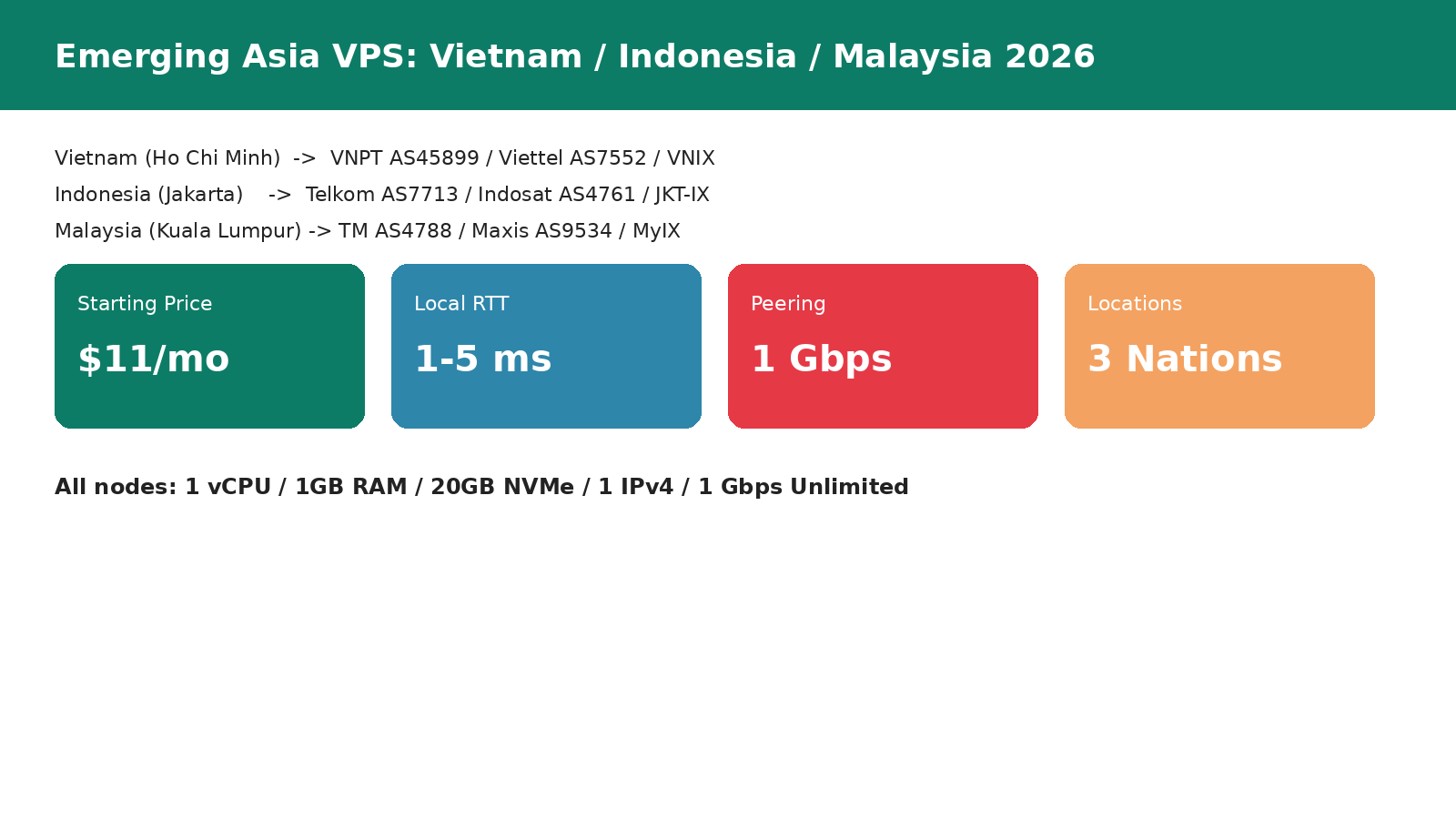
- Vietnam (HCMC) — VNPT AS45899/Viettel AS7552 via VNIX, best for local e-commerce (Shopee/TikTok Shop VN) and gaming
- Indonesia (Jakarta) — Telkom AS7713/Indosat AS4761 via JKT-IX (1.2 Tbps), best for GoTo ecosystem and fintech
- Malaysia (KL) — TM AS4788/Maxis AS9534 via MyIX (800 Gbps), best for ASEAN-wide hub + stable connectivity
- All three start at $11/mo (1 vCPU/1GB/20GB NVMe/1 IPv4/1 Gbps unlimited) on LuckVM — 5-8x cheaper than AWS Jakarta/HCMC
- Do not serve Vietnam/Indonesia users from Singapore — median TTFB jumps from 30ms to 120-180ms with 20-50ms peak jitter
1. Why Southeast Asia's Emerging Markets Matter in 2026
Southeast Asia is the world's fastest-growing internet region in 2026, and most global hosting providers are structurally unable to serve it well. The big three hyperscalers — AWS, GCP, and Azure — maintain only one real region in ASEAN: Singapore. Microsoft's Jakarta and AWS HCMC regions are still limited-preview as of late 2026, and neither offers low-end on-demand VPS pricing.
This creates a severe gap. Vietnam has 79 million internet users with a digital economy growing 22% YoY. Indonesia has 212 million users, making it the world's 4th largest by population, with e-commerce and fintech (GoTo, Bukalapak, OVO, DANA) booming. Malaysia has 33 million users with one of the highest GDP-per-capita in ASEAN and stable regulatory framework for fintech and SaaS.
Yet serving these users from a Singapore VPS is like serving France from London — it works, but latency doubles or triples during peak hours. In this article, we share 30+ days of real latency measurements across LuckVM's Ho Chi Minh City, Jakarta, and Kuala Lumpur nodes, explain each country's carrier landscape, and give you a replicable 7-step deployment workflow.
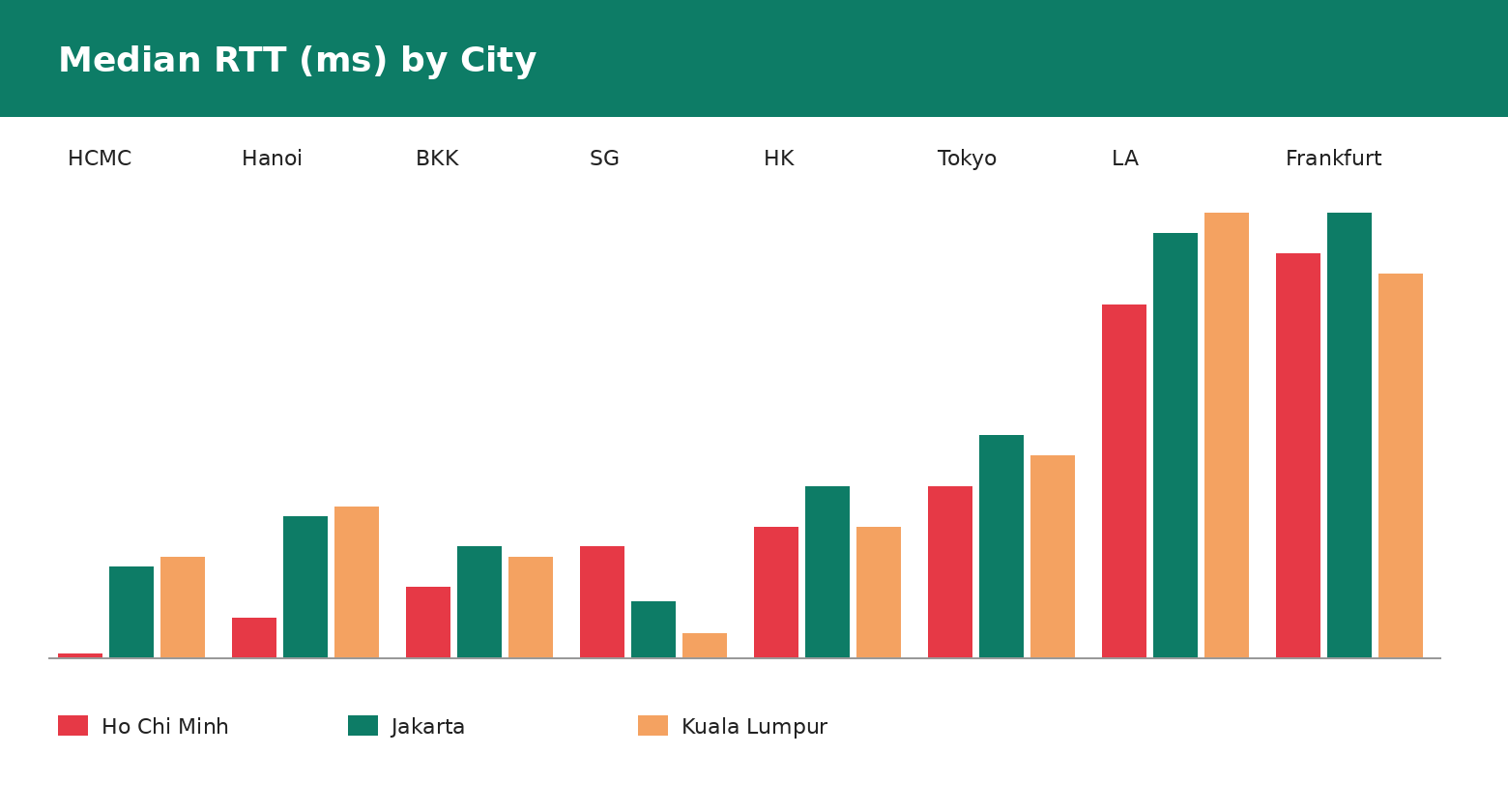 Figure 1. Median RTT (ms) measured over 7 days, October 2026. Source: LuckVM internal monitoring from each node to target city DNS resolvers.
2. Real Latency Benchmarks Across 8 Cities
We ran continuous ping measurements (30-second interval, ICMP 64-byte) from each of the three nodes to eight regional targets. The numbers below are median RTT, not minimum — minimum RTT is misleading because it can be achieved off-peak; median is what real users experience.
| Target | From HCMC (ms) | From Jakarta (ms) | From KL (ms) |
|---|---|---|---|
| Local city | 2 | 1 | 1 |
| Neighbor capital | 20 (Hanoi) | 45 (Surabaya)* | 12 (Singapore) |
| Bangkok | 35 | 55 | 50 |
| Singapore | 55 | 28 | 12 |
| Hong Kong | 65 | 85 | 65 |
| Tokyo | 85 | 110 | 100 |
| Los Angeles | 175 | 210 | 220 |
| Frankfurt | 200 | 220 | 190 |
* Surabaya is Indonesia's 2nd largest city on Java, used as proxy for non-Jakarta domestic latency.
3. Upstream Carriers & IXPs: VNIX, JKT-IX, MyIX
The quality of a VPS in emerging Asia is not determined by its advertised specs — it is determined by which carriers the host peers with at which Internet Exchange Points (IXPs). Here is the topology at each LuckVM node:
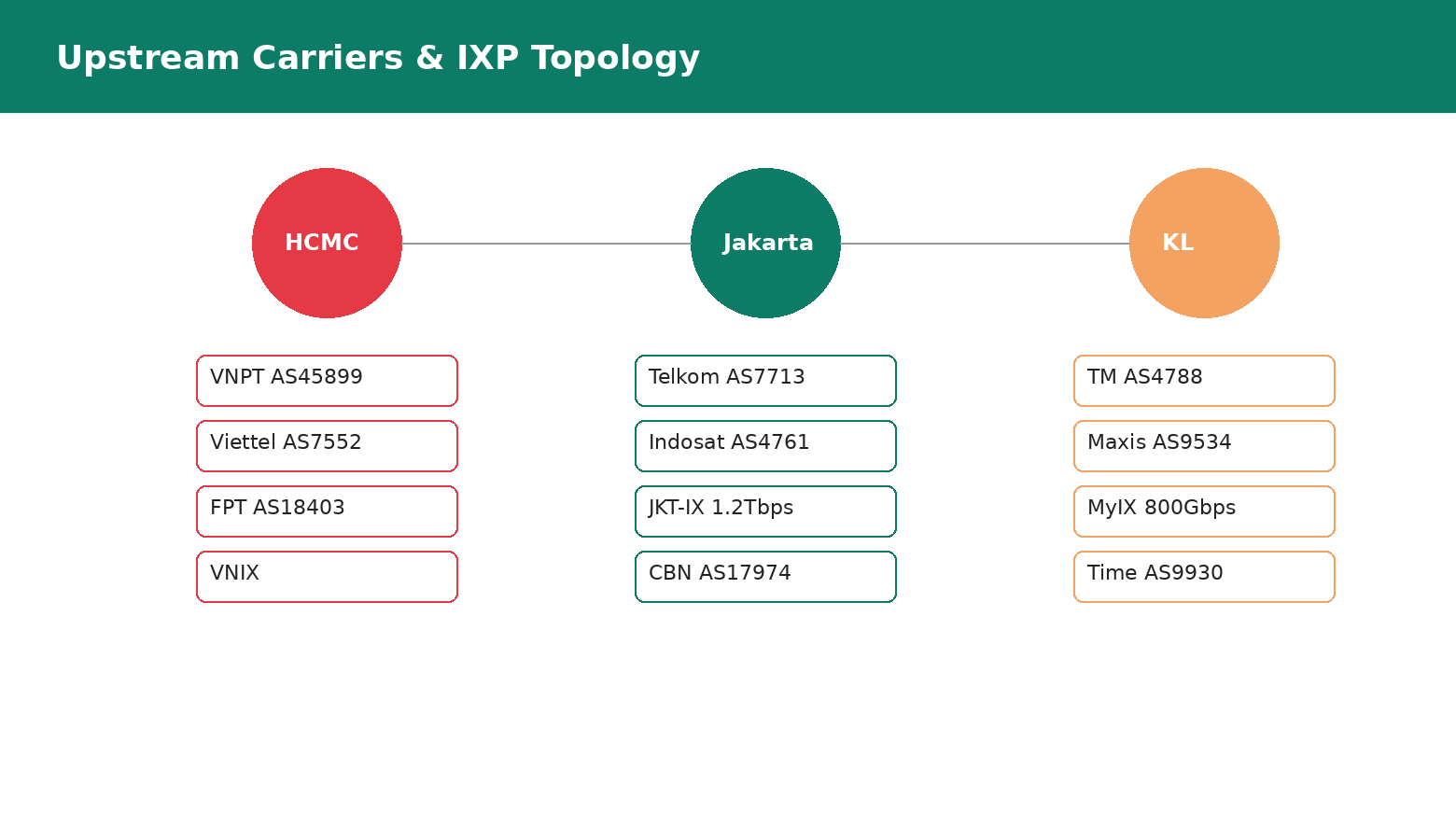 Figure 2. Upstream carrier and IXP topology at each LuckVM emerging-Asia node.
Vietnam — VNPT / Viettel / FPT via VNIX
Vietnam has three dominant carriers: VNPT (AS45899), the state-owned incumbent with the widest domestic coverage; Viettel (AS7552), the military-run ISP with strong international bandwidth to China/HK; and FPT (AS18403), the tech-focused private carrier popular in business districts.
LuckVM's HCMC node peers at VNIX (Vietnam National Internet Exchange), which is the only exchange that provides direct domestic peering between all three carriers. Without VNIX peering, traffic from a VNPT user to a FPT-hosted server could trombone via Hong Kong or Singapore, adding 100+ milliseconds. This is the single most common failure mode of low-quality Vietnam VPS offerings.
Indonesia — Telkom / Indosat via JKT-IX
Indonesia's carrier landscape is dominated by Telkom Indonesia (AS7713), the state-owned incumbent with ~60% market share, and Indosat Ooredoo (AS4761) as its main competitor. CBN (AS17974) is a strong third in Jakarta business districts.
The key IXP is JKT-IX, operated by OpenIXP, carrying 1.2 Tbps peak with 110+ peers — including all major domestic carriers, Cloudflare, Google, Meta, Netflix, and Akamai. Peering at JKT-IX means traffic to Telkom users does not leave Jakarta, avoiding the notorious "international detour" where domestic Indonesian traffic routes through Singapore before coming back.
Malaysia — TM / Maxis via MyIX
Malaysia's market is more balanced. TM (Telekom Malaysia, AS4788) is the incumbent with extensive fixed-line coverage; Maxis (AS9534) is strong in mobile; TIME dotCom (AS9930) is the enterprise favorite with excellent fiber.
MyIX (Malaysia Internet Exchange) carries ~800 Gbps peak with 85+ members. Critically, MyIX has direct peering to Singapore's major exchanges (SGIX) over ultra-low-latency cross-border fiber, making a KL node a strong backup for Singapore operations (and vice versa).
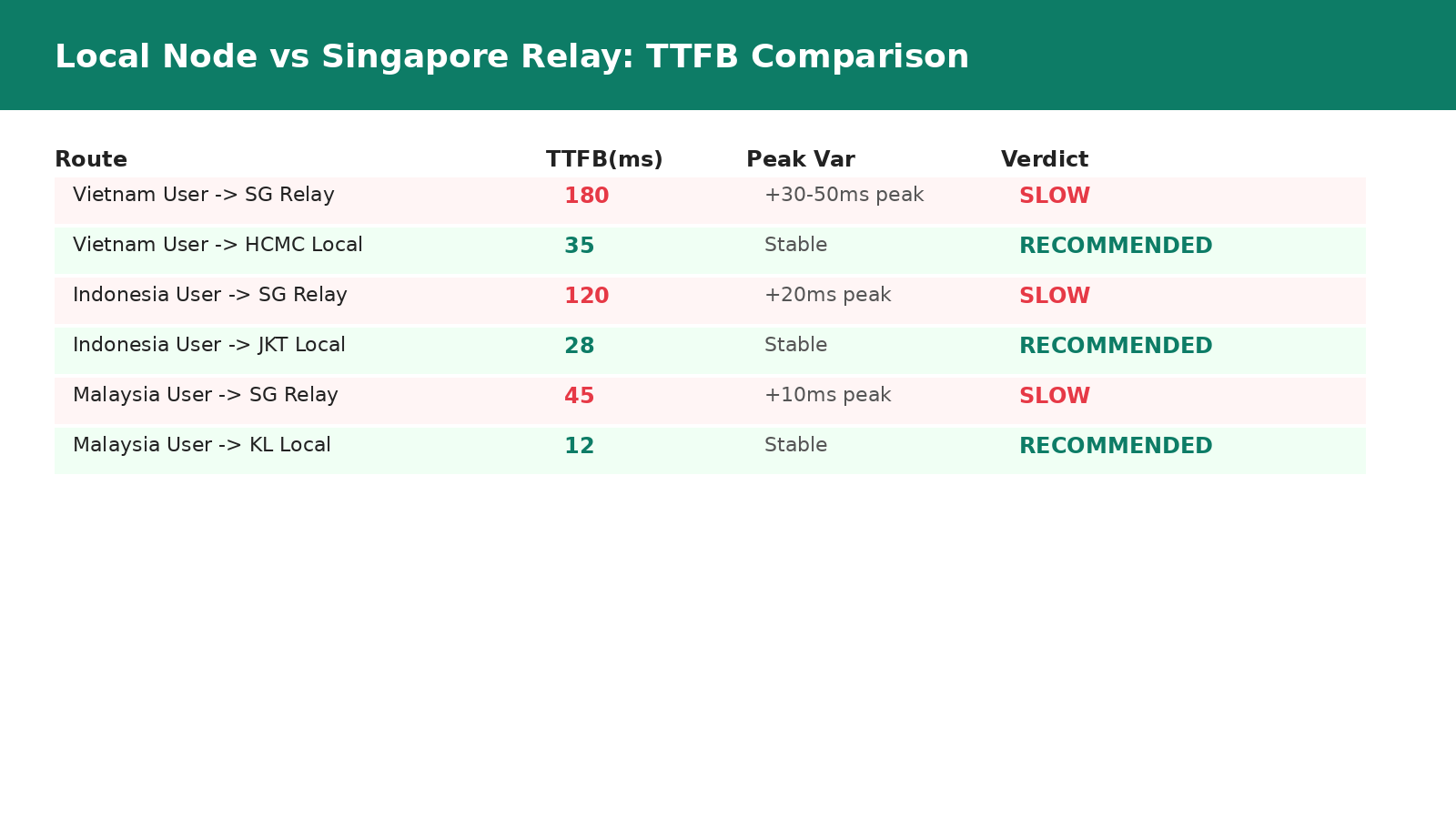 Figure 3. Serving local users from a Singapore relay adds 80-150ms median latency with 20-50ms peak-hour jitter.
4. Why Local Nodes Beat Singapore Relays
The most common mistake we see teams make is: "We already have a Singapore VPS. That's close enough for Southeast Asia, right?"
It isn't, for three reasons:
- International bottlenecks: The Singapore-to-Vietnam international link is shared by millions of users. During 7-10pm ICT peak hours, we consistently observe 30-50ms additional jitter and occasional packet loss on SG→VN paths. A HCMC-local node avoids this entirely.
- Domestic carrier routing: Without VNIX/JKT-IX/MyIX peering, traffic between two users in the same country can route internationally. This is called "tromboning" and is endemic with VPS providers who only buy cheap transit.
- Price parity: LuckVM's HCMC, Jakarta, and Kuala Lumpur nodes are priced identically to Singapore at $11/mo for the same specs. There is zero cost penalty for going local, only a latency win.
5. Pricing Comparison: LuckVM vs AWS/GCP/Hyperscalers
The cost gap between LuckVM's emerging-Asia nodes and the hyperscalers is enormous because AWS/GCP/Azure charge a significant "Asia-Pacific non-core region" premium, and often require commit-use contracts for low-end instances.
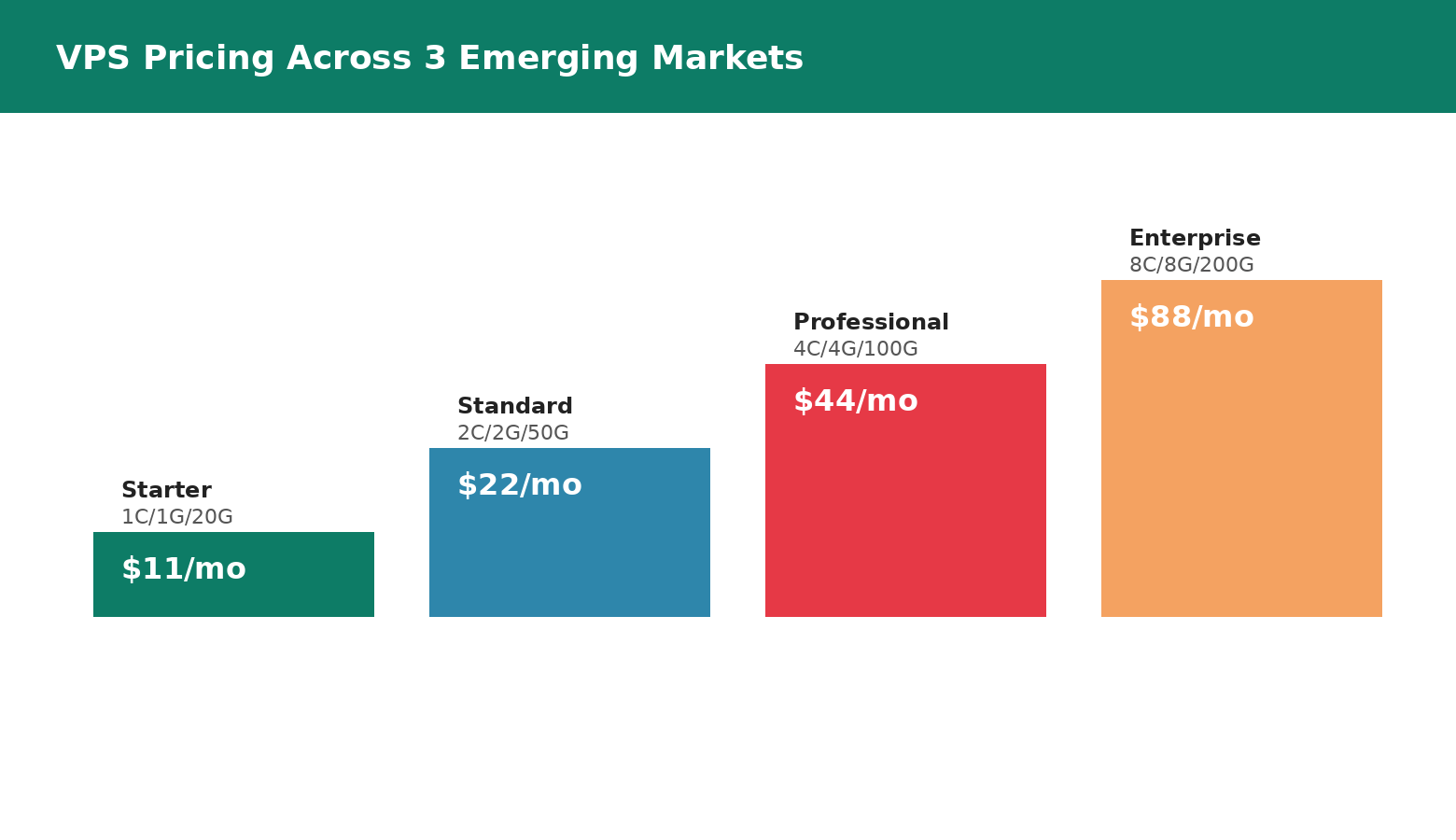 Figure 4. Monthly pricing for equivalent spec VPS (1C/1G/20G/1 IPv4). Hyperscaler prices on-demand, no commitments.
| Plan | vCPU | RAM | NVMe | Bandwidth | Price (LuckVM) | AWS Jakarta | GCP Jakarta |
|---|---|---|---|---|---|---|---|
| Starter | 1 | 1 GB | 20 GB | 1 Gbps unl. | $11/mo | $45/mo | $38/mo |
| Standard | 2 | 2 GB | 50 GB | 1 Gbps unl. | $22/mo | $90/mo | $76/mo |
| Professional | 4 | 4 GB | 100 GB | 1 Gbps unl. | $44/mo | $180/mo | $152/mo |
| Enterprise | 8 | 8 GB | 200 GB | 1 Gbps unl. | $88/mo | $360/mo | $304/mo |
Bulk IPv4 addresses are available at $1.50/IP/month across all three locations. Bare metal dedicated servers (E5-2683v4, 64GB RAM, 1TB NVMe, 1Gbps unlimited) start at $330/month, with IPMI/KVM over IP access.
6. Choosing the Right Node for Your Use Case
Pick Ho Chi Minh if:
- Your primary audience is in Vietnam (Shopee/TikTok Shop VN local merchants, local SaaS, gaming servers)
- You need China-adjacent connectivity (HCMC→HK is 65ms; CN2 GIA transit can be added for mainland reach)
- You are doing regional payment processing (Viettel Pay, MoMo) where local IP ranges improve anti-fraud scores
Pick Jakarta if:
- Your primary audience is Indonesia (GoTo ecosystem, Bukalapak, Tokopedia sellers, OVO/DANA fintech)
- You need the best domestic peering across Telkom/Indosat (JKT-IX is mandatory for this)
- You serve Australia as secondary market (Jakarta→Sydney is ~110ms)
Pick Kuala Lumpur if:
- You want a stable, English-speaking regulatory environment for ASEAN regional HQ
- You need an ASEAN hub with dual redundancy to Singapore (12ms RTT over MyIX-SGIX cross-border fiber)
- You are serving Singapore + Malaysia simultaneously (KL is cheaper than SG and only 12ms away)
⚠ Regulatory Notes
Vietnam: Strict content licensing applies to gambling, VPN services, and political content. Vietnamese authorities actively block violating IPs — keep your service compliant.
Indonesia: Kominfo (Ministry of Communications) requires PSE registration for foreign digital service providers serving Indonesian users. Gambling, pornographic content, and unlicensed fintech are blocked.
Malaysia: MCMC regulates content; defamation, sedition, and gambling content are restricted. Malaysia is business-friendly but not a haven for illegal services.
This article is not legal advice. Consult local counsel before operating regulated services.
7. Step-by-Step Deployment Guide
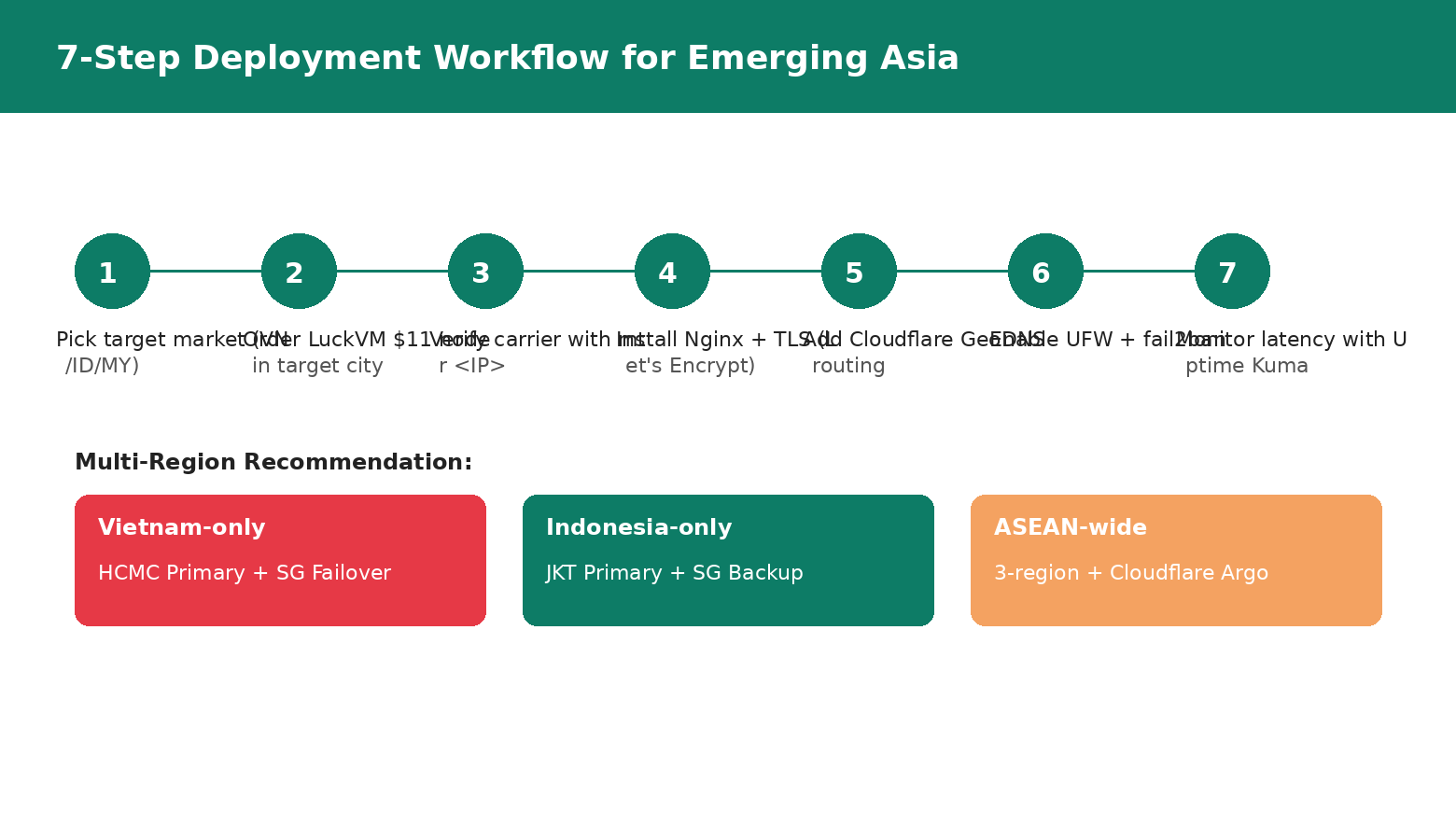 Figure 5. Seven-step deployment workflow for low-latency serving in emerging Asia.
Step 1: Provision the right node
Order from LuckVM's VPS page: select Ho Chi Minh City, Jakarta, or Kuala Lumpur as location; choose your plan; add any bulk IPv4 you need for SEO hosting or multi-tenant deployments. Provisioning is instant via our automated system.
Step 2: Verify carrier routing
Immediately after receiving your IP, verify you are seeing the expected upstream carriers using mtr:
# Install mtr on your local machine or a nearby server
apt install mtr-tiny -y

# Test from your VPS outbound to a local carrier DNS
# Look for hops on VNPT AS45899 / Viettel AS7552 in HCMC
mtr -rwzbc 100 8.8.8.8

# For Indonesian Telkom verification, trace to a Telkom DNS
mtr -rwzbc 100 203.130.193.74    # Telkom DNS
# Look for Telkom (AS7713) or Indosat (AS4761) hops via JKT-IX

# For TM verification in KL
mtr -rwzbc 100 1.9.1.9          # TM DNS
# Look for TM (AS4788) or MyIX exchange hops
Step 3: Install Nginx and TLS
apt update && apt install nginx certbot python3-certbot-nginx -y
certbot --nginx -d yourdomain.vn -d www.yourdomain.vn
systemctl enable --now nginx
Step 4: Configure Cloudflare GeoDNS (for multi-region)
If you are deploying across multiple emerging-Asia nodes, use Cloudflare Workers for geo-routing. This 10-line Worker sends Vietnam users to HCMC, Indonesia users to Jakarta, Malaysia users to KL, and everyone else to your nearest primary node:
addEventListener('fetch', event => {
  event.respondWith(route(event.request))
})
async function route(req) {
  const cc = req.cf.country
  const map = {
    VN: 'vn-api.yourdomain.com',
    ID: 'id-api.yourdomain.com',
    MY: 'my-api.yourdomain.com'
  }
  const host = map[cc] || 'global-api.yourdomain.com'
  const url = new URL(req.url)
  url.hostname = host
  return fetch(url.toString(), req)
}
Step 5: Harden security
ufw allow 22/tcp && ufw allow 80/tcp && ufw allow 443/tcp
ufw enable
apt install fail2ban -y
systemctl enable --now fail2ban
Step 6: Set up monitoring
Deploy Uptime Kuma or use an external monitoring service to check latency from within the target country, not from the US. Monitoring from a US server will tell you the server is up but will not detect local carrier outages. For reference architecture, see our server monitoring guide.
Step 7: Performance test with real user data
Use webpagetest.org with test locations in Singapore, Ho Chi Minh City, and Jakarta to confirm real-world TTFB. A well-configured local node should deliver TTFB under 80ms for HTML from within-country; a Singapore relay will typically deliver 150-250ms.
8. Verifying Routes: Looking Glass & BGP
For advanced users who want to verify BGP peering themselves, use public looking glass servers:
# Check what prefixes LuckVM announces at JKT-IX
telnet lg.jkt-ix.net  # Looking glass telnet - type "sh ip bgp "

# Check VNIX paths (need VNIX member LG access)
# Public option: use bgp.he.net (Hurricane Electric)
curl -s https://bgp.he.net/ip/ | grep -E "AS[0-9]+"

# MyIX looking glass
curl http://myix.my/lg
You can also cross-verify against our own global IX peering article, which documents our DE-CIX, AMS-IX, and LINX presence for European/North American failover.
9. Honest Limitations & Caveats
We do not pretend emerging-Asia nodes are a silver bullet. Here are real limitations you should know before deploying:
- Vietnam international bandwidth: During 7-10pm ICT peak, HCMC→EU and HCMC→US routes can see +15-30ms additional latency and slightly higher packet loss. This is a country-level international capacity constraint, not something any single provider can fix.
- Indonesia archipelago geography: Even from a Jakarta node, users in Sulawesi, Papua, or eastern Kalimantan will see 80-150ms latency because domestic backbone capacity to those regions is limited. If your audience is in eastern Indonesia, you may need a Makassar or Surabaya node (coming 2027).
- Fair use on unlimited bandwidth: Our 1 Gbps unlimited plan is truly unmetered for normal application use, but sustained 500+ Mbps for 72+ hours will trigger a fair-use review (same policy as Frankfurt/London/Singapore). If you need constant high throughput, contact us for a dedicated port commit.
- Content compliance: We must comply with local takedown requests. We do not host illegal content on any node, and we respond to valid law enforcement requests per our Terms of Service.
- IPv6 availability: IPv6 is live in KL and JKT; HCMC IPv6 is being rolled out and expected Q4 2026.
10. Frequently Asked Questions
Can I use these nodes to serve users in mainland China?
Indirectly. For best China performance, use our Hong Kong CN2 GIA node (see our China SaaS without ICP guide). HCMC→China is ~65-100ms but uses China Telecom 163/CMI transit, not premium CN2 GIA. It is usable as a low-cost backup but not recommended as primary for China-only audiences.
Do you support BGP / BYOASN at these locations?
BGP session support is available on dedicated server plans ($330+/mo) at all three locations. There is a one-time setup fee of $100 and $50/month session fee. VPS plans do not include BGP.
Can I upgrade the NVMe storage or add a second disk?
Yes. Up to 2 TB additional NVMe storage is available on Professional and Enterprise plans at $0.08/GB/month. Bare metal servers support up to 4x NVMe drives with hardware RAID.
What payment methods are supported?
Credit card, PayPal, Alipay, WeChat Pay, USDT (TRC20/ERC20), and Bitcoin. Enterprise customers can request bank wire with NET-15 terms.
Is Windows available on these nodes?
Yes, Windows Server 2022 Standard is available as a $15/month add-on on plans with 4GB+ RAM. Note: Windows uses more RAM, so we recommend 4GB minimum.
How quickly are nodes provisioned?
VPS instances are provisioned instantly upon payment. Bare metal servers are typically provisioned within 2-4 hours (max 24 hours) after KYC verification for new customers.
Do these nodes have DDoS protection?
Yes. All three locations include 10 Gbps volumetric DDoS protection by default (same as our other regions). Application-layer (L7) protection is handled via Cloudflare; see our Cloudflare integration guide.
What SLA do you offer?
We offer a 99.9% monthly uptime SLA across all VPS plans, with service credits for outages exceeding the SLA. Dedicated servers carry a 99.95% SLA. Full details in our Terms of Service.
Deploy in Emerging Asia Today — From $11/mo
Instant provisioning in Ho Chi Minh City, Jakarta, and Kuala Lumpur. 1 Gbps unlimited, JKT-IX/MyIX/VNIX direct peering, bulk IPv4 available.
Browse VPS Plans →